10 Dash Social competitors for small and medium-sized businesses
Actively seeking alternatives to Dash Social? We’ve got the top ten Dash Social competitors for you to compare.


If you’ve been using Dash Social but aren’t quite satisfied with the enterprise-level price tag, you may be evaluating more efficient alternatives.
To help you find the right tool for your team’s needs, we’ve put together a list of the top 10 Dash Social competitors and how they line up, especially for teams prioritizing efficient reporting, reliable coverage, and meaningful benchmarks.
Let’s get started.
Why consider using a Dash Social alternative?
While Dash Social can be a great tool for some businesses, there are several reasons you might be considering an alternative:
- the pricing structure becomes difficult to justify to the CFO (especially when some features are underused)
- custom content segmentation is a must
- acquisitions or policy changes force a tech-stack reassessment
Whether you’re looking to replace Dash Social or find something more affordable with stronger analytics coverage, here are the key considerations to keep in mind.
Cost
First things first, Dash Social is an enterprise-level tool with an enterprise-level price to match. While you can take advantage of a 14-day free trial to see if the software is all it’s cracked up to be, your budgeting has to be substantial enough to justify its $999+/month starting point.
The lowest package starts at $999/month for features like:
- Unlimited users
- Link-in-bio landing page
- Analytics
- Social media scheduling/publishing
- Content calendar
However, brands looking for features like content segmentation have to move to the next tier at $899/month, and advanced analytics or social listening require a $1,599+/month plan.
One review of the software shares:
“Most of the brands I work with could not afford something like this. I also wish more things came with certain packages rather than them being $1,000+ add-ons.”
This pricing stress aligns with what many teams told us during tool migrations: they needed to “find the best data for something that fits the budget”. For teams whose CFOs demand both efficiency and affordability, Dash Social can feel inaccessible, driving them to search for alternatives that don’t sacrifice coverage.
Content segmentation
More than just the price point, certain features simply aren’t up to snuff. Dash Social’s content tagging and segmentation—available only on the ~$1k/month tier—are reported as being difficult to use and limited to AI assistance, with no manual tagging option.
This is a major blocker for teams who rely on tagging workflows to produce board-ready or client-ready analyses. Several users told us missing manual tagging options created unnecessary friction: segmentation became something that required workarounds, not something that improved efficiency.
In fact, another review claimed that the predictive AI ended up being less accurate than expected, making segmentation a slow learning curve rather than a plug-and-play experience, especially for teams who need fast, reliable insights week over week.
Social media analytics and reporting
While Dash Social offers multi-channel analytics in its basic plan, accessing competitive analytics or more advanced reporting requires a higher-tier subscription.
This is particularly difficult for teams who need aggregated benchmarks or multi-platform data for board decks, quarterly reviews, or pitches. Many social media leaders shared that their previous setups involved screenshots, Excel workarounds, or manual checks, all of which break down at scale.
With the cost of Dash Social’s Advanced plan sitting at $1,599+/month, many teams shift toward alternatives that offer:
- competitive insights at lower tiers
- reporting exports (PDF, PPT, XLS)
- and coverage across TikTok, YouTube, LinkedIn, and more.
As one user summarized:
“We needed full coverage for TikTok and YouTube, especially in our region, and our previous vendor didn’t support it.”
Yet another reviewer also mentioned that they wish some analytics features were more advanced and that there were more robust reporting options. With the Dash Social price tag, you’d think its capabilities would be a lot more comprehensive.
Top Dash Social alternatives
Socialinsider - the #1 alternative for Dash Social
If you’re looking for comprehensive social media analytics and competitive data that help you gauge performance and improve your social media strategy, Socialinsider is going to be the best Dash Social alternative for your needs.
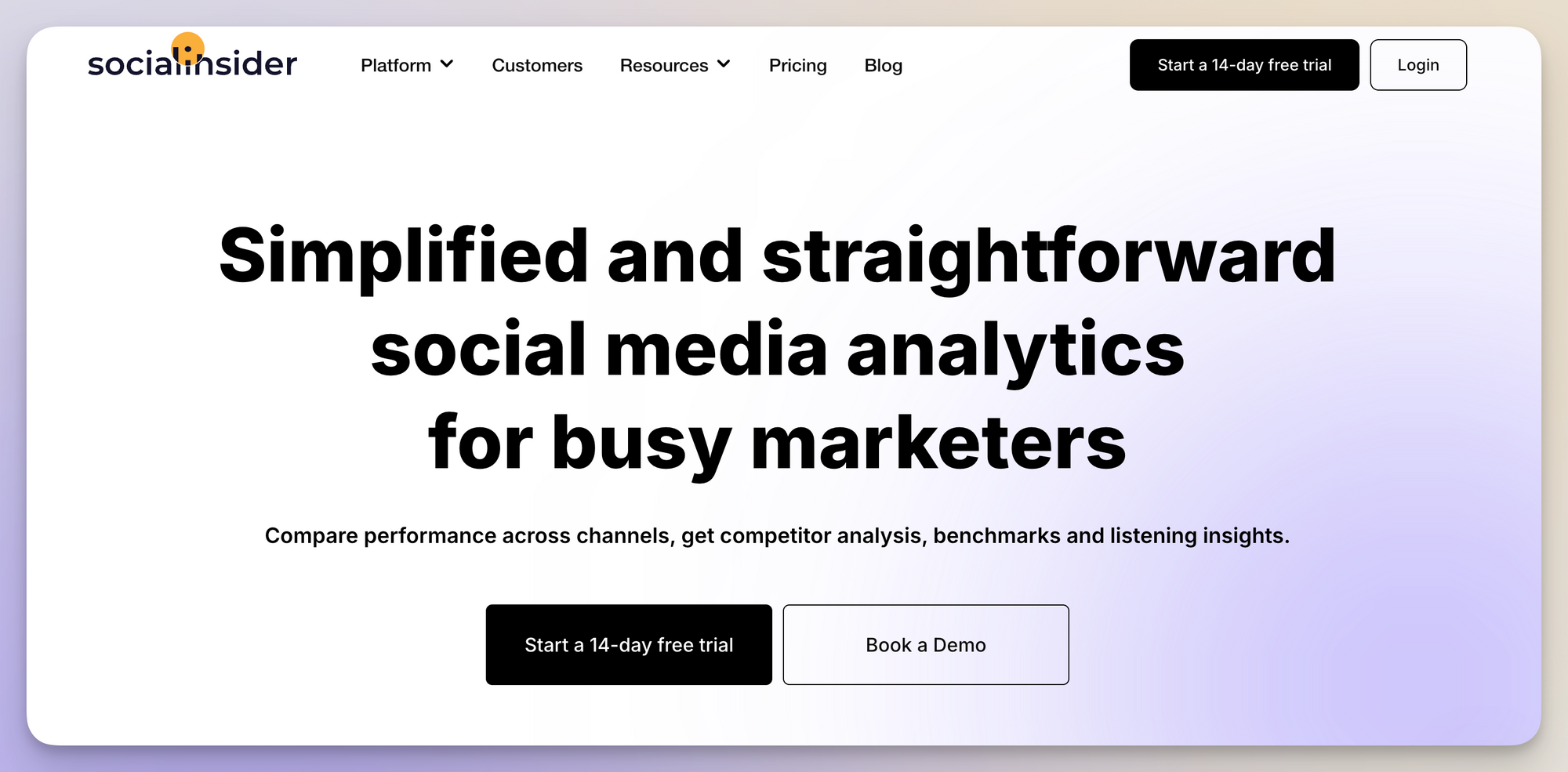
Some of Socialinsider’s comparable features include:
- Competitive insights and benchmarking
- Content tagging and segmentation
- Social media analytics and reporting
However, and this is particularly important for teams who prioritize efficiency over feature bloat, Socialinsider’s capabilities are far more accessible at lower pricing tiers and offer broader platform coverage where most vendor gaps appear (TikTok, YouTube, LinkedIn).
Many users who switched from other tools validated Socialinsider during the free trial specifically because it covered the platforms their previous vendors didn’t.
Before I do a deeper dive, let’s look at a comparison chart showcasing why Socialinsider is among the top Dash Social alternatives:
Competitive data
First things first, let’s look at how Socialinsider and Dash Social compare when it comes to competitive data and insights. As I’ve mentioned previously, Dash Social only provides competitor insights with its Advance plan that starts at $1,599/month.
Alternatively, Socialinsider’s competitive benchmarking tools are available within its first-tier, $99/month plan, making this feature dramatically more accessible for teams who need to monitor competitors across multiple platforms. Not only that, but as you can see in our comparison chart above, Socialinsider’s tools are also much more robust.
Socialinsider’s competitive analysis tools are also extremely easy to use. Simply add social accounts you want to compare your own brand’s performance to and start navigating through benchmarks and competitor reports.
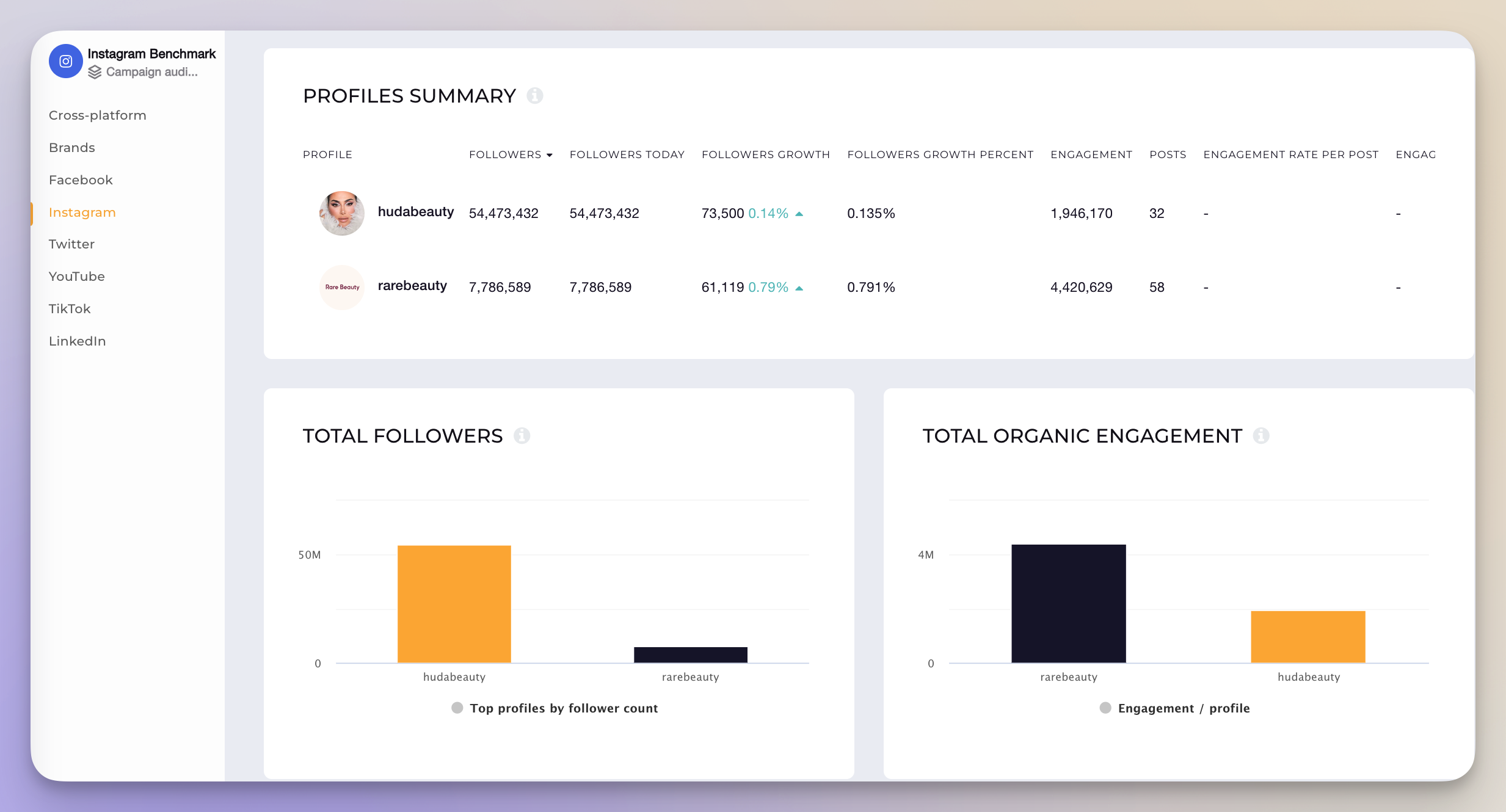
Socialinsider’s competitive analysis tools are also extremely easy to use. Simply add the brands you want to compare and explore benchmarks, insights, and automated comparisons that reduce manual reporting time, an essential efficiency gain for teams replacing manual screenshots or Excel workflows.
Victor Mukubvu, Digital Marketing Analyst at Mitsubishi Electric, summed it up well:
“It saved me time gathering data and allowed me to be more proactive in using the information gathered.”
Content tagging and segmentation
Aside from competitive analysis, Socialinsider offers powerful tools for segmenting your content, analyzing campaign performance, and finding patterns in audience behavior.
This is especially valuable for social media leaders who rely on tagging workflows for:
- client deliverables
- quarterly insights
- reporting consistency across analysts
- Looker Studio pipelines
- period-wide performance reviews
With Socialinsider, you can create manual tags and auto-tags using keywords or hashtags to segment out different social media content pillars. This hybrid approach gives teams total control, something Dash Social lacks, as it restricts segmentation to AI-only tagging in higher-priced tiers.
Compared to Dash Social, this combination of flexibility + affordability is a major reason teams switch. For data-driven analysts, manual tagging is fundamental, not optional.
Social media reports
Social media analytics and reporting is another key feature you should be looking for in a marketing tool. With Socialinsider, you can easily pull platform-specific or cross-platform reports that are automated, board-ready, and exportable in multiple formats (CSV, XLS, PPT, PDF).
This is a major time saver for teams who previously relied on:
- screenshots
- Excel formatting
- manual tracking
- multiple vendor exports
Many teams told us they needed to produce period-wide and multi-platform reports for leadership and clients, and Socialinsider’s automation eliminated hours of repetitive reporting work.
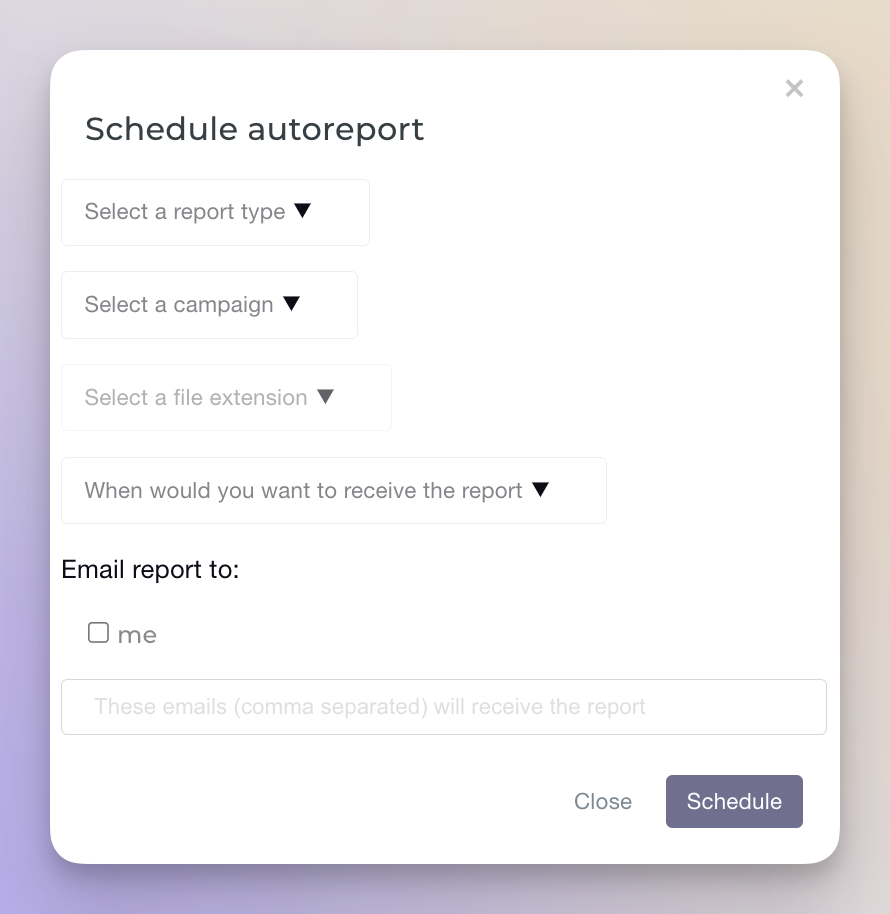
Yana Bushmeleva, COO and Partner at Fashionbi, is a big fan of this feature, saying:
“Our team became more efficient. We do not need to spend time on data gathering. Instead, we can focus on insights and analysis.”
Pricing
As we’ve mentioned, the price difference between Socialinsiders and Dash Social is astronomical. Easily get started with a top tier social media analytics and benchmarking
tool for just $99/month with Socialinsider.
Dash Social, on the other hand, starts at $999/month and goes up exponentially from there, making it inaccessible to small and medium businesses who need to stretch their marketing budgets.
Alternative to Dash Social #2: Later
Later is a social media and influencer management platform that’s a top competitor of Dash Social. The two tools offer comparable features made for ecommerce businesses that tend to have a heavier emphasis on visual content.
Later was initially created to focus on Instagram, so many of its tools (i.e., its social listening capabilities) are only usable on that platform. However, it does offer social media analytics across five different platforms, bringing it closer to Dash Social’s seven platform capabilities.
The biggest difference between Later and Dash Social is that the former has plans made for individuals and small businesses. While they may not get access to Later’s full suite of tools, their lowest plan starts at just $25/month. Its agency plan even starts at $200/month, more than 50% lower than Dash Social’s smallest tiered plan.
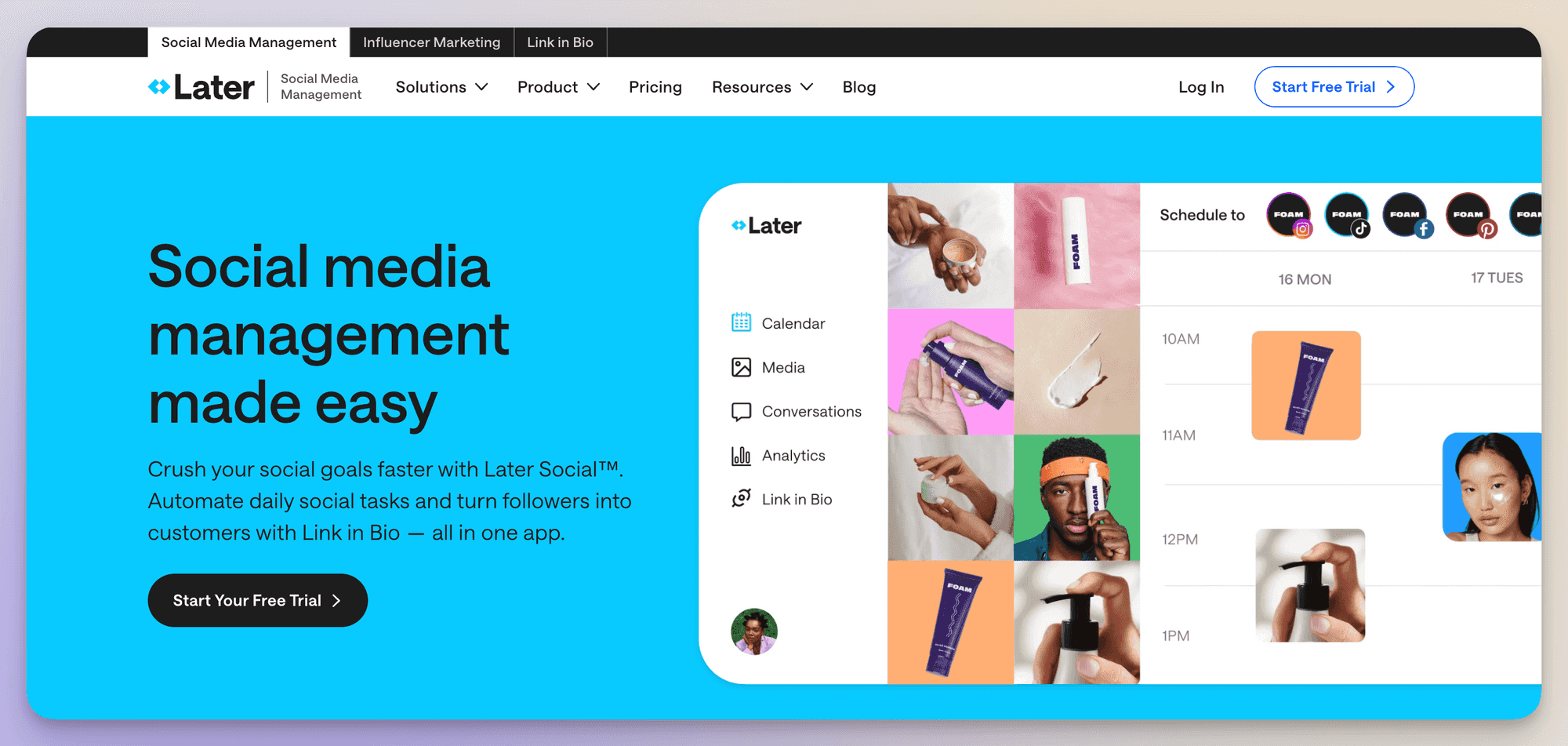
Later’s comparable features include:
- Social media scheduling and publication
- Social media analytics and reporting
- Social listening
- Link-in-bio
- Influencer marketing management
So why should you choose Later?
Ecommerce brands on a budget will get many of the same features as Dash Social, but at a fraction of the cost. Plus, Later has more features for brands that heavily use Instagram as a part of their strategy, including a visual planner, AI caption writer, hashtag suggestions, and more.
Alternative to Dash Social #3: Sprout Social
Sprout Social is a tool that offers a number of social media management solutions, making it a great alternative to Dash Social.
Sprout’s arsenal of features are also catered to agencies or enterprise businesses, and while it has a price point to match, it’s still much cheaper than Dash Social. In fact, Sprout Social’s lowest plan starts at $249/month per user, compared to $999.
Sprout Social’s interface comes with visually appealing charts and graphs, perfect for sharing with your team. Easily connect your social media platforms and even add competitors so you can compare online performance across networks like Facebook, X/Twitter, and Instagram.
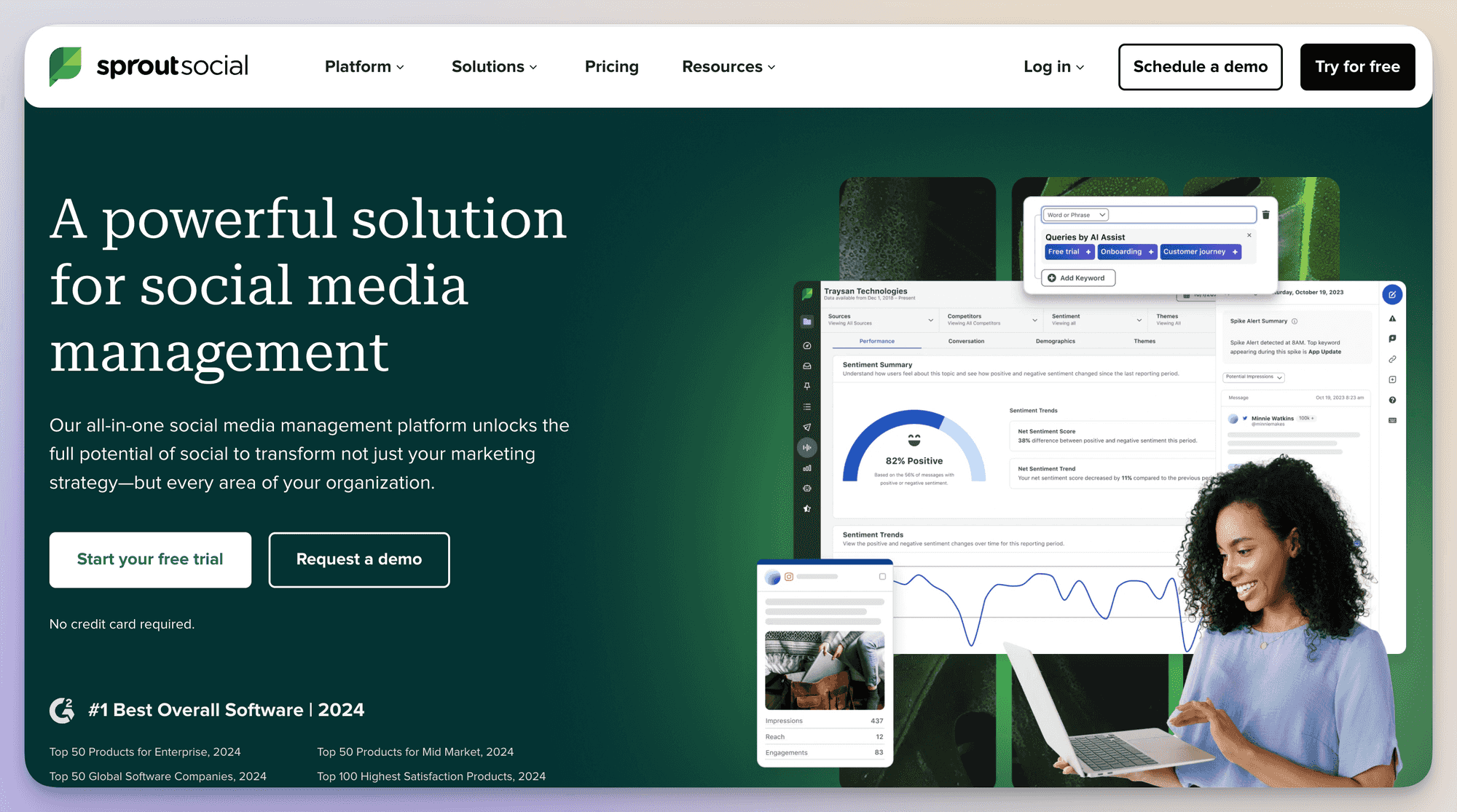
Sprout Social and Dash Social have a number of comparable features, including:
- Social media scheduling and publication
- Social media analytics
- Advanced analytics with competitive benchmarking
- Social listening
- Community engagement
- Link-in-bio
- Influencer marketing management
- AI tools
Why choose Sprout Social?
Sprout Social and Dash Social have a lot of similar features, making the two extremely comparable tools with vastly different price points. So for many brands, Sprout Social makes a lot more sense from a financial standpoint.
Sprout Social also provides a lot more tools for B2B companies, whereas Dash Social focuses more on B2C industries. Sprout also includes employee advocacy features, making this the perfect platform for companies looking for that capability.
Alternative to Dash Social #4: Sprinklr
Sprinklr is a customer experience platform with four different enterprise offerings:
- Sprinklr Service: A suite of tools that help with customer service teams
- Sprinklr Social: Basic social media marketing tools like publishing and engagement
- Sprinklr Insights: Analytics tools like social listening and competitive benchmarking
- Sprinklr Marketing: Additional marketing tools like social advertising and campaign planning
The biggest difference between Sprinklr and Dash Social is that while Sprinklr offers more overall features, each of its suites is priced separately instead of offering tiered plans. Brands looking to access features across suites can contact the platform for custom pricing.
However, the Sprinklr Social package—the most similar to Dash Social—starts at $249/month per user. That’s half the price of Dash Social’s starter plan. Although this may change if you’re only interested in Insights or Marketing tools.
Comparable features between the two tools include:
- Social media scheduling and publication
- Community engagement
- Social listening
- Competitive insights and benchmarking
- Social media analytics and reporting
- Campaign planning and monitoring
Why choose Sprinklr?
Sprinklr, like Dash Social, is an enterprise-level tool. However, it also offers customer service capabilities, something that Dash Social doesn’t have as a part of its service offerings. In fact, companies looking to access both Social and Service features can take advantage of a Sprinklr plan that starts at $359/month per user, making Sprinklr a much more appealing software.
Alternative to Dash Social #5: Bazaarvoice
Bazaarvoice is a UGC platform, offering a Dash Social competitor for a different set of features. Dash Social and Bazaarvoice both pair well with ecommerce companies as many of their capabilities are meant to help improve the overall social shopping experience.
However, while the two do still offer some social media management tools as well, their main focus is for social commerce. Bazaarvoice, though, offers a lot more in the way of social selling.
From gathering product reviews to optimizing social media shopping experiences, Bazaarvoice has a lot more to offer ecommerce businesses.
Keep in mind, though, that Bazaarvoice appears to have a more premium pricing structure—brands have to contact its sales team, though, to find out specific pricing information.
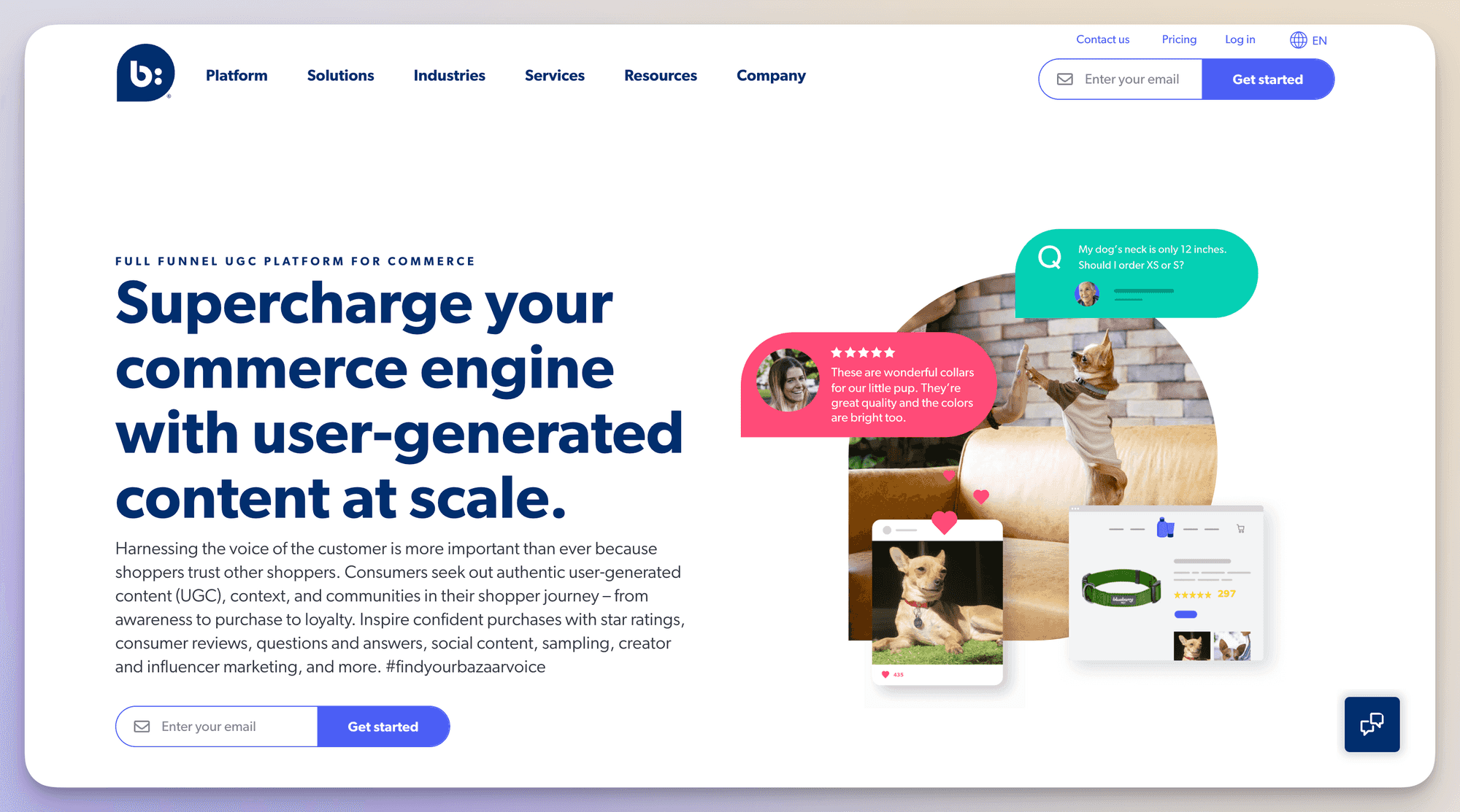
Comparable features between Dash Social and Bazaarvoice include:
- Social media scheduling and publication
- Community engagement
- Content library
- Social media analytics and reporting
- Link-in-bio
- Influencer marketing management
Why choose Bazaarvoice?
Bazaarvoice is the perfect choice for medium to large ecommerce businesses looking to sell more on social media.
With features that optimize the social shopping experience and help you get authentic product reviews and opinions, Bazaarvoice can provide a positive ROI.
While Dash Social is a great mixture of features from some of the social media management tools on our list and Bazaarvoice, it only has a handful of features from each. Bazaarvoice, on the other hand, incorporates some basic social media management tools while also mastering capabilities that any online store would need.
Alternative to Dash Social #6: Loomly
Loomly is another social media management tool with features such as post planning, publishing, and analyzing capabilities. When comparing alternatives, Loomly comes out as a great option for brands that need a one-stop-shop for their social media marketing.
Plus, Loomly is a much more affordable option. Plans start at $42/month for up to two users. While Dash Social does allow unlimited users, brands would need more than 20 users to make the pricing comparable.
Dash Social, as we’ve mentioned, offers more in the way of social shopping tools, but brands with small teams and budgets—and who don’t need a wide arsenal of social commerce features—can perfectly take advantage of Loomly’s capabilities.
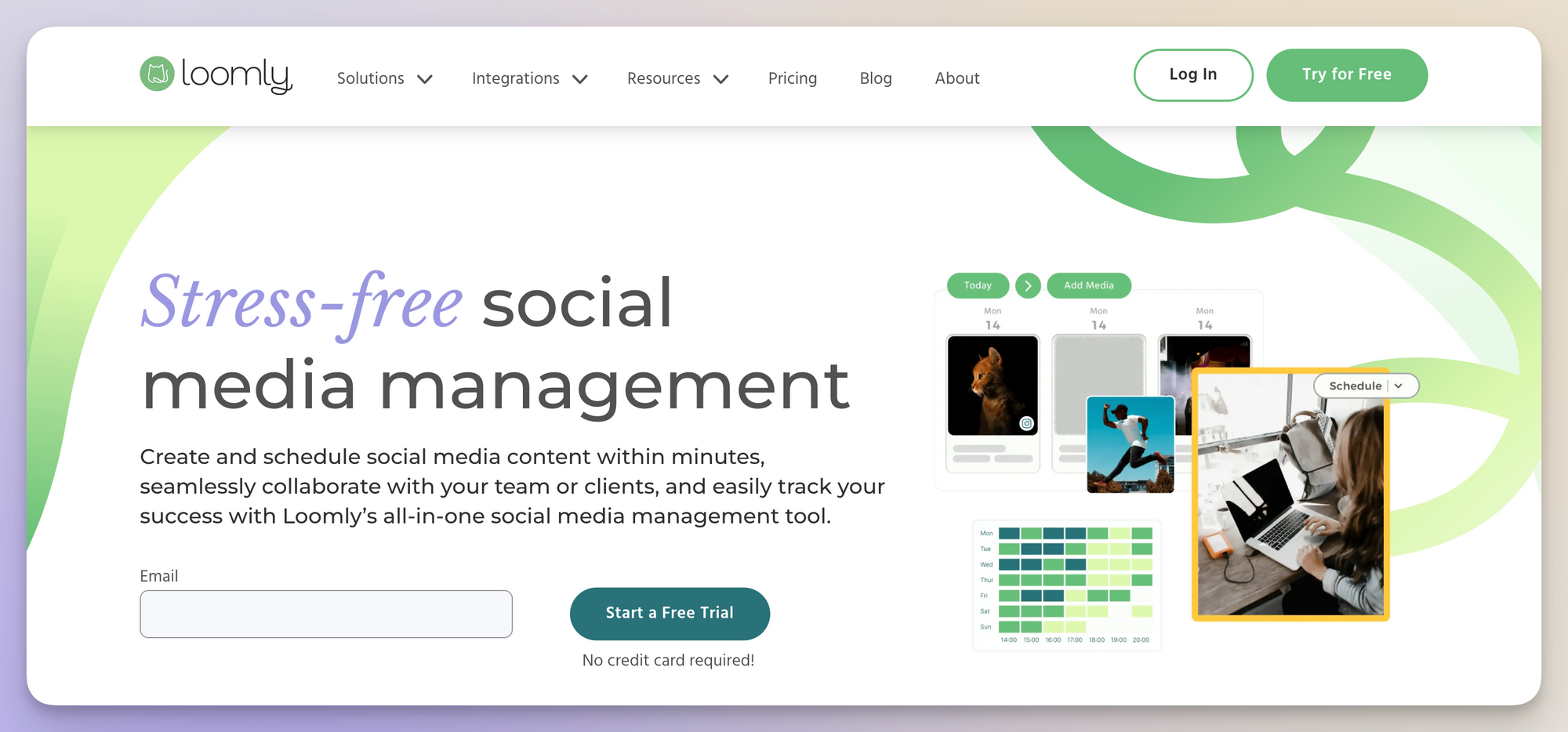
Lining the two up side by side, their comparable features include:
- Social media scheduling and publication
- Campaign management
- Social media analytics and reporting
- Community engagement
Why should you choose Loomly?
If you’re looking for a tool that specializes in social media management, Loomly is going to be a much better option than Dash Social. While some of their features align, Loomly offers a lot more in the way of social media marketing.
For example, Loomly has AI-powered post optimization tips that help marketers publish optimized content at the best times for their audience. Plus, Loomly offers useful collaboration and approval workflow features, perfect for agencies and larger social media teams.
Loomly also offers its own link shortening tool, helping brands track clicks and ROI of their social media efforts, regardless of whether they’re B2C, ecommerce, or B2B.
Alternative to Dash Social #7: Social Champ
Social Champ is another social media management tool that fits our list of top Dash Social alternatives. This tool specializes in AI assistance and automation, helping to make social media marketing as streamlined as possible.
Use Social Champ’s AI capabilities to auto-schedule content while also brainstorming new ideas that your target audience will love.
While Dash Social offers a predictive AI tool to help brands get content performance predictions, Social Champ’s AI features are more all-encompassing.
More than that, Social Champ is also available at a fraction of the cost of Dash Social. Monthly plans start at just $29/month for two users.
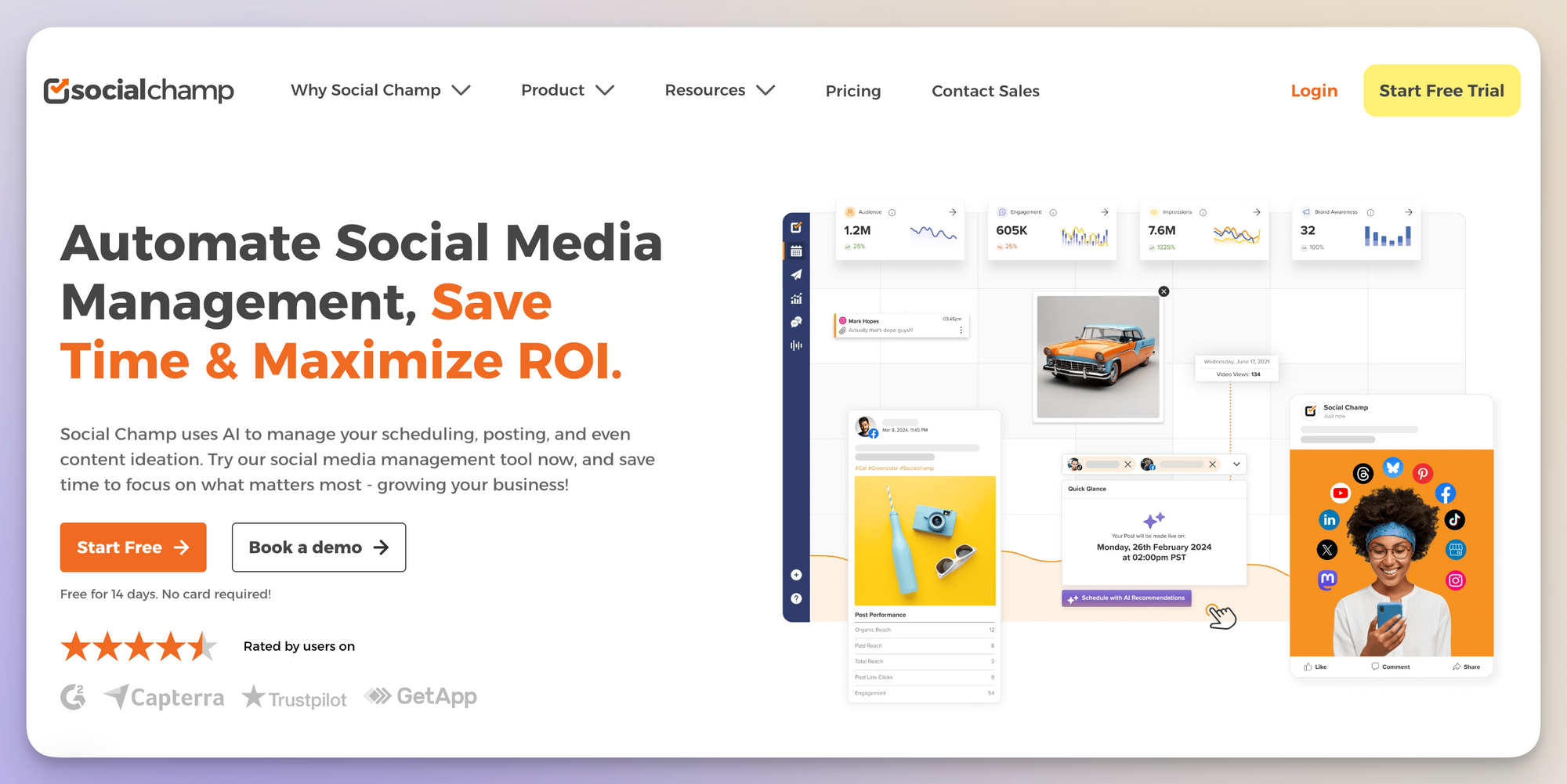
Comparable features between the two tools include:
- Social media scheduling and publication
- Community engagement
- Social media analytics and reporting
- Social listening
- AI assistance
So why choose Social Champ over Dash Social?
If you have a small social media team that’s looking for AI help in managing a strategy, Social Champ is going to be the perfect option for you. It makes planning and scheduling a breeze so that your team can focus on more important things like ad campaigns and strategy improvement.
Social Champ also supports more social media platforms than Dash Social. With Dash Social, you get access to the most popular platforms, like Facebook, Instagram, and TikTok. But Social Champ lets brands access more niche platforms, like Bluesky, Threads, and Mastodon.
Alternative to Dash Social #8: Facelift
Facelift is a social media orchestration platform that helps brands create and implement their social media strategy with ease. It’s one of the most closely aligned tools on our list to Dash Social—and it has the price point to match.
Pretty much any feature you’d be looking for with Dash Social is available through Facelift—and then some. Which makes its €1,199/month (~$1,311 USD at the time of this writing) price tag make a little more sense.
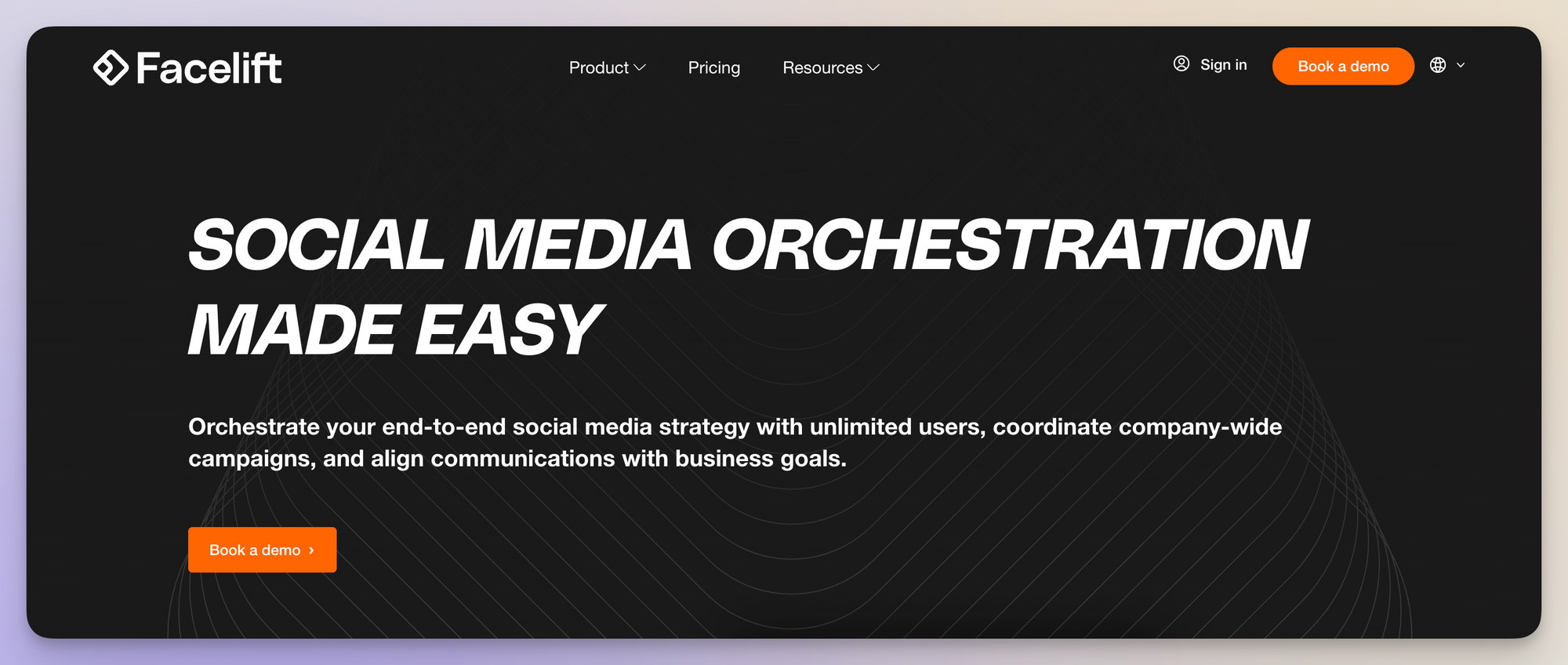
The tools’ comparable features include:
- Social media scheduling and publication
- Community engagement
- Social media analytics and reporting
- Competitive benchmarking
- Content segmentation
- Content library
- Social listening
So why should you choose Facelift?
While Dash Social has content performance prediction and link-in-bio tools, Facelift has a number of other tools that make it the quintessential social media management platform for enterprise businesses.
Most of Dash Social’s features can be found at Facelift, and then some. Facelift offers capabilities like image editing, content inspiration, approval workflows, review management, a WhatsApp business platform, and more.
Alternative to Dash Social #9: DrumUp
DrumUp is a content marketing and social media management tool that helps brands create and share top-tier content across their online presences.
With DrumUp, your social media team can easily automate content curation by putting together workflows for finding and approving content using DrumUp’s algorithm.
DrumUp’s entire toolset is built to make a social media manager’s job as easy as possible, providing hashtag recommendations, repeat schedules, high-quality content to share, and more. Dash Social does also offer automation capabilities, but at a much higher cost. DrumUp has a completely free limited plan, and its premium plans start at just $19/month.
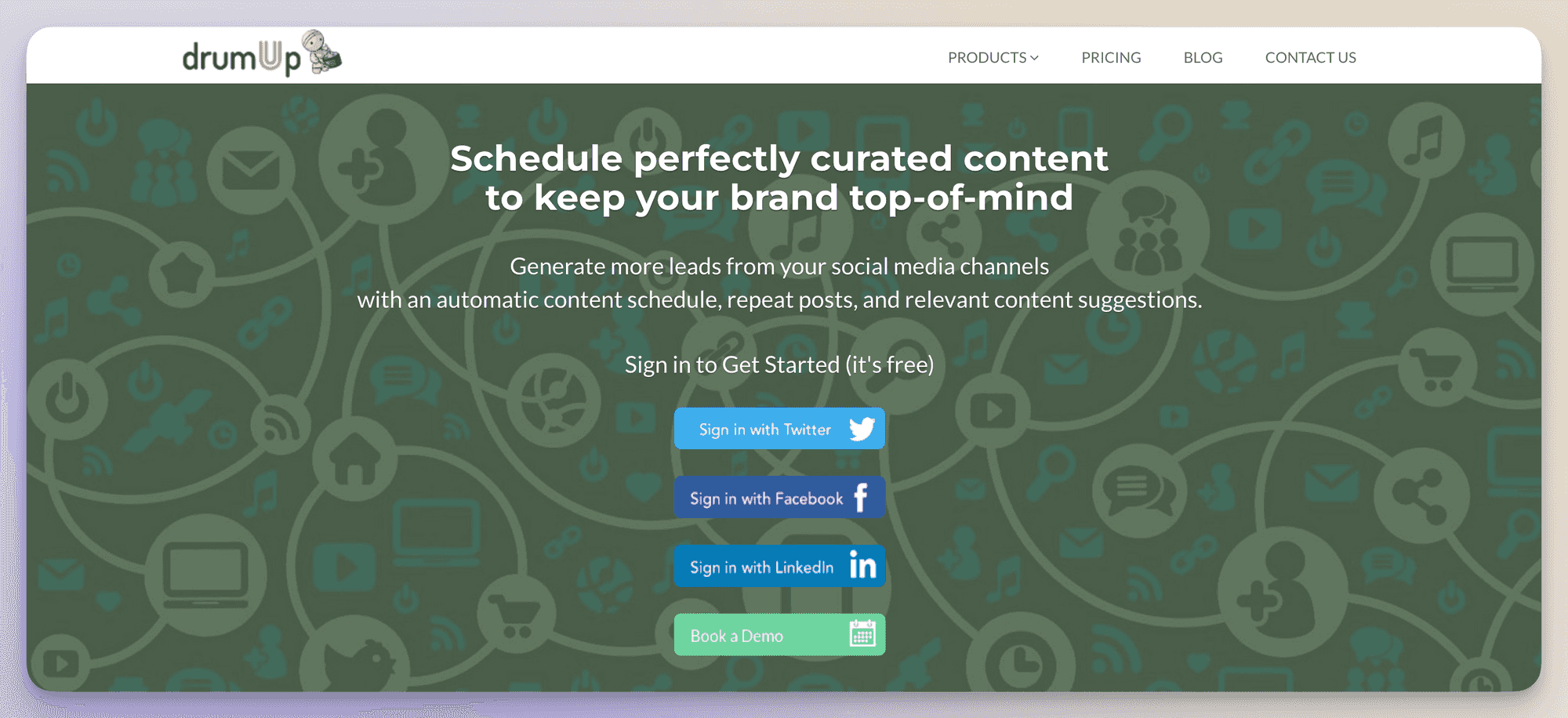
Comparable features between the two include:
- Social media analytics
- Content ideation
Why choose DrumUp?
If your brand needs to share a lot of content on social media, DrumUp can be a great tool to help find that content online. Its algorithm searches across the web to find high-quality, relevant content that your audience will engage with.
Dash Social offers certain automation features, but doesn’t have as much in the way of content curation. DrumUp is going to be the perfect tool to incorporate into your tech stack for finding and sharing content.
Alternative to Dash Social #10: Meltwater
Meltwater is a consumer intelligence platform that offers comparable features to Dash Social. Meltwater is another enterprise-level tool that interested users must contact the company in order to get pricing information.
Meltwater, however, offers a number of base features that Dash Social does while also including even more options that help brands with public relations and market research.
Comparable features between the two platforms are:
- Social media analytics
- Social listening
- Social media management
- Influencer marketing
So why should you choose Meltwater?
Meltwater offers a number of the same tools that Dash Social does, and then some. If you’re looking for an enterprise-level tool that can help with your social media and influencer marketing, Meltwater’s tools can do just as much as Dash Social’s.
However, Meltwater also has the capability to assist with your public relations strategy and consumer intelligence providing you with insights that can tailor your marketing messaging to the right segment of people.
Final thoughts
If you’re actively seeking alternatives to Dash Social, start by clarifying your must-have coverage and reporting needs.
For many teams, efficient workflows > bloated feature sets, so coverage gaps, benchmark needs, pricing pressure, and deliverable demands often drive the final decision for the users that choose Socialinsider. However, if your needs go beyond social media analytics, and you also require feature like social listening or content scheduling, then Dash Social will be better suited for you as an all-in-one platform.
When comparing alternatives, we’d love it if you gave Socialinsider a try.
FAQs about Dash Social alternatives
What is the onboarding process like, and can you train my whole team?
Socialinsider offers onboarding support and personalized demo sessions for new users. You can request onboarding assistance for your entire team, ensuring everyone is familiar with the platform’s features and workflows.
Will I lose any data or need to reauthorize accounts if I reorganize my projects?
No, reorganizing your projects in Socialinsider does not result in data loss or require account reauthorization. The data displayed in Socialinsider is based on the data received through the official platform API, so if you want to track the same profile in two or more different projects, the data displayed will be the same.
Does Socialinsider support all the platforms and features I used in Dash Social?
Socialinsider supports analytics and benchmarking for Facebook, Instagram, TikTok, YouTube, and Twitter (now X). For an up-to-date list of features and supported platforms, please refer to our Pricing page.
Can I export my old reports and continue my current reporting workflows?
No, you cannot export reports from Dash Social and import them into Socialinsider. Socialinsider allows you to generate and export new reports for tracked profiles within the platform only.
How does your pricing compare, and can I scale my plan up or down as my needs change?
Socialinsider offers flexible pricing plans designed to fit different business needs. You can scale your plan up or down according to your requirements. For specific pricing details or to discuss plan adjustments, please contact Socialinsider sales or your account manager. For more information on features and supported platforms, you can also check out our Pricing page.
Is there data available to view the post engagement of influencer posts?
Yes, if the influencer’s account is public. You can add it as a profile to your project and analyze engagement on their posts, just as you would with any competitor profile. For posts made on your own account in collaboration with an influencer, you can use campaign tagging to track and analyze engagement as part of a campaign.
Can I swap accounts in and out of the dashboard?
Yes, Socialinsider allows you to add or remove profiles from your project dashboard at any time. The number of active profiles and the frequency of swaps (removals/replacements) are subject to your subscription plan’s limits. For specific swap allowances, please refer to your plan details or contact your account manager.
Does Socialinsider also analyze boosted posts?
Socialinsider can identify and analyze boosted (promoted) posts for Facebook only, providing insights into their performance compared to organic posts.
For Instagram business accounts, the Instagram API only allows retrieving data for organic posts, so this distinction is not possible at the moment.
Is Socialinsider support available 24/7?
No, Socialinsider support is available during business days only. For assistance outside these hours, you can submit your request, and the support team will respond during business hours. The average response time during business days is 2 hours.
Is there a certification program or training available for using Socialinsider?
No, there is currently no official certification program for Socialinsider. However, onboarding help and demo sessions are available to ensure you and your team are comfortable using the platform.
Chloe West
Chloe West is a digital marketer working in social media, content, email marketing, and more since 2014. When she's not working, you'll find her playing card games or reading romance novels.

Know what your competitors do — before your manager asks
Get instant social benchmarks & reports without manual work.